Competitor Intelligence
Competitor Intelligence crawls competitors’ product details, pricing, and strategies to create comprehensive reports.
Answer: It's beneficial to use the tool regularly, at least quarterly, to stay updated on competitor strategies.
Advanced options
What the agent is doing
Elapsed: 0:00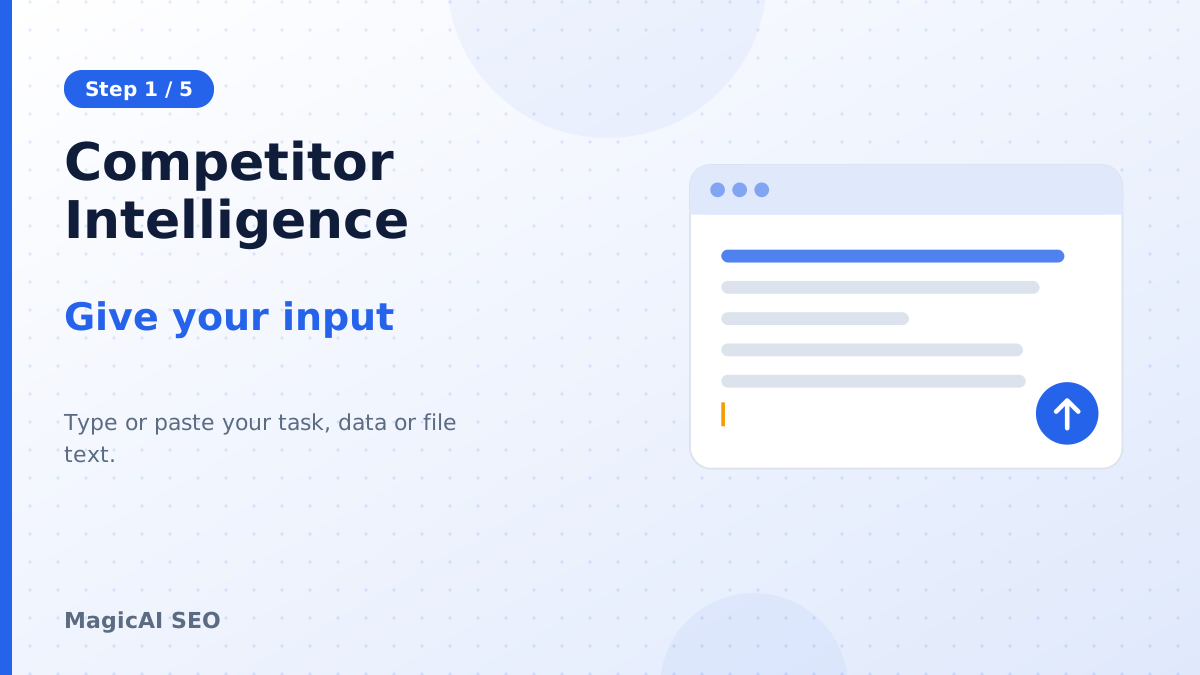
1. Give your input
Waiting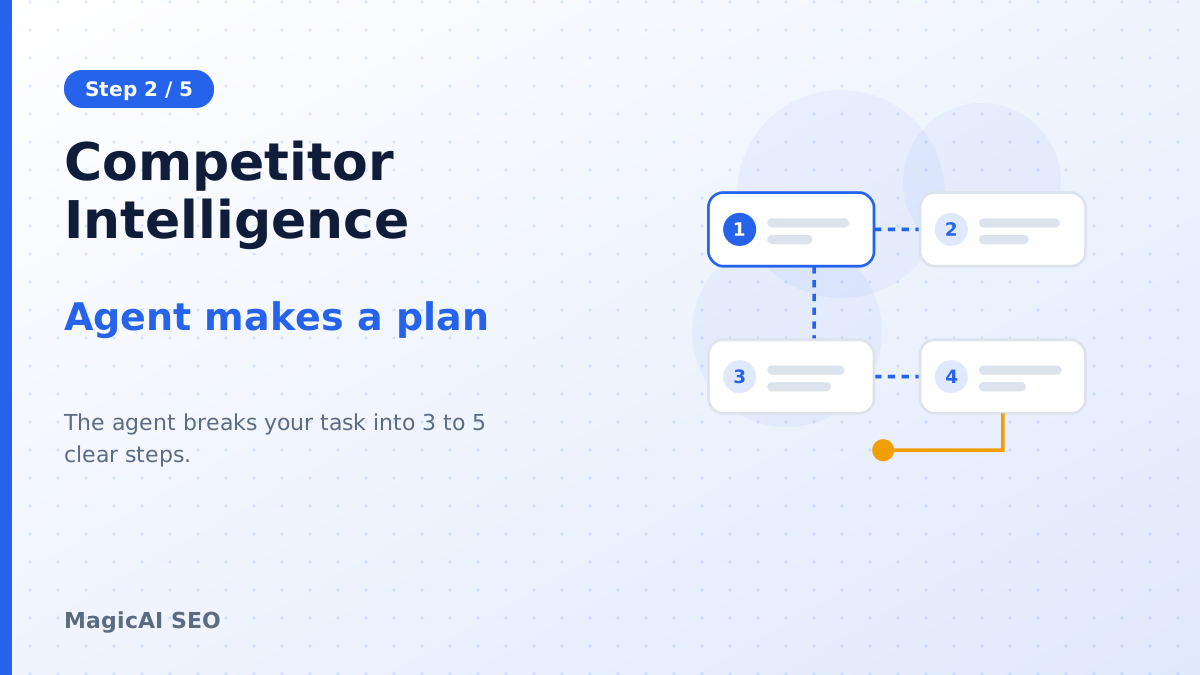
2. Agent makes a plan
Waiting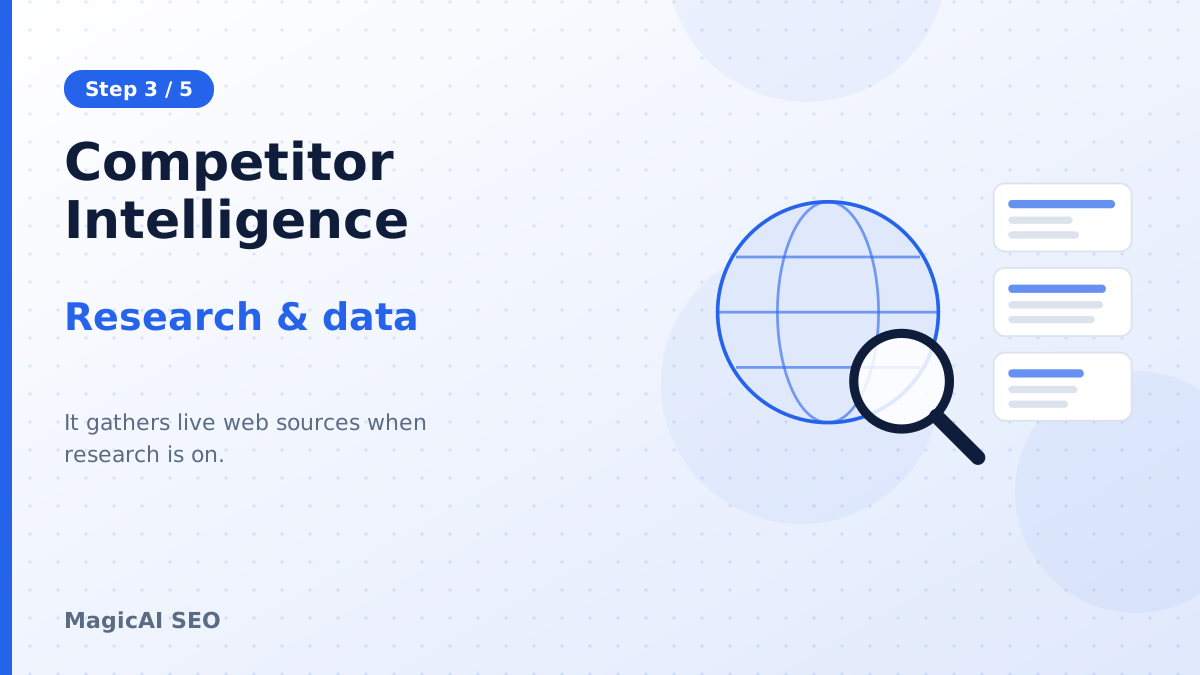
3. Research & data
Waiting
4. Executes each step
Waiting
5. Final report
WaitingResult
How this agent works
Give your input
Type or paste your task, data or file text.
Agent makes a plan
The agent breaks your task into 3 to 5 clear steps.
Research & data
It gathers live web sources when research is on.
Executes each step
Every step is completed using the results of the last.
Final report
You get a structured report to copy, download or print.
About this tool: Competitor Intelligence
What is Competitor Intelligence?
Competitor Intelligence is a powerful tool that enables businesses to gather insights into their competitors' products, pricing, and strategic initiatives. By analyzing this data, organizations can refine their own offerings and stay competitive in their industry.
Who is Competitor Intelligence for?
This tool is ideal for marketers, business analysts, product managers, and entrepreneurs who want to understand their competitive landscape better. Whether you are part of a startup or an established company, gaining insights into your competitors can significantly enhance your strategic planning and decision-making processes.
How to Use Competitor Intelligence Step by Step
- Input Competitor Data: Start by entering the brand name of your competitor alongside your product or service. For example, "boAt vs Noise — Smartwatch Market."
- Review the Generated Plan: The tool will create a multi-step plan detailing the analysis to be performed.
- Live Web Research: Optionally, allow the tool to conduct real-time research on the web for the most recent and relevant data.
- Execution of Steps: Watch as each step in the plan is executed, with the tool gathering data from various sources to compile insights.
- Receive Your Report: Once the analysis is complete, download your final report in your preferred format (Markdown, TXT, Word, HTML) or print it directly.
What are Concrete Use Cases for Competitor Intelligence?
- Market Analysis: Identify gaps in your product offerings by analyzing competitors’ new launches and features. For example, a brand can track a competing smartwatch's unique fitness functionalities and adjust its features accordingly.
- Pricing Strategy: Evaluate your competitors’ pricing models to optimize your own pricing strategy. This can involve studying price fluctuations and discounts offered by peers within a specific timeframe.
- Product Development: Leverage findings to inspire your own product development process. If a competitor adds a popular feature, you can consider similar innovations to maintain relevance.
- Content Strategy: Understand what kind of marketing content resonates with your audience by reviewing competitor campaigns, allowing you to craft more compelling marketing messages.
- Sales Strategy: Use insights to strengthen your sales propositions by emphasizing features or benefits that set you apart from competitors.
Tips for the Best Results
- Be Specific: The more detailed your inputs are, the more accurate the information will be. Specify time frames and particular products for deeper insights.
- Combine Data Sources: Use insights from Competitor Intelligence in conjunction with market research to form a comprehensive view of your industry.
- Regularly Monitor: Make it a habit to utilize the tool regularly so as to keep up with competitor changes and evolving market trends.
- Engage Your Team: Share findings with your team to collaborate on strategic planning and foster innovative ideas based on research.
What are the Limitations and Safety Considerations?
Although Competitor Intelligence provides valuable insights, it is essential to remember that data availability may vary, especially if competitors utilize privacy measures on their web content. Furthermore, while the tool can analyze current trends, it's important to approach predictions conservatively, as market dynamics can change rapidly. Always ensure you comply with legal guidelines regarding competitive analysis to avoid any ethical or legal issues.
Frequently asked questions
Question: How often should I use Competitor Intelligence?
Answer: It's beneficial to use the tool regularly, at least quarterly, to stay updated on competitor strategies.
Question: What types of reports can I generate?
Answer: You can generate reports in various formats, including Markdown, TXT, Word, and HTML, depending on your preference.
Question: Is there a limit to the number of competitors I can analyze?
Answer: There is no strict limit; however, the depth and detail of the report may vary based on the total number of competitors.
Question: Can I customize the output language and format of the reports?
Answer: Yes, you can specify your desired output language and format prior to generating the report.
Question: Does Competitor Intelligence include real-time data?
Answer: Yes, it offers an optional live web research feature that can provide current data about competitors.
Question: What should I do if I need more in-depth analysis?
Answer: You can request enhancements or additional insights once your initial report is generated to cover specific areas of interest.